About
I started out preventing accidents.
Now I prevent churn. It turns out to be the same job, pointed at a different kind of failure.
The short version
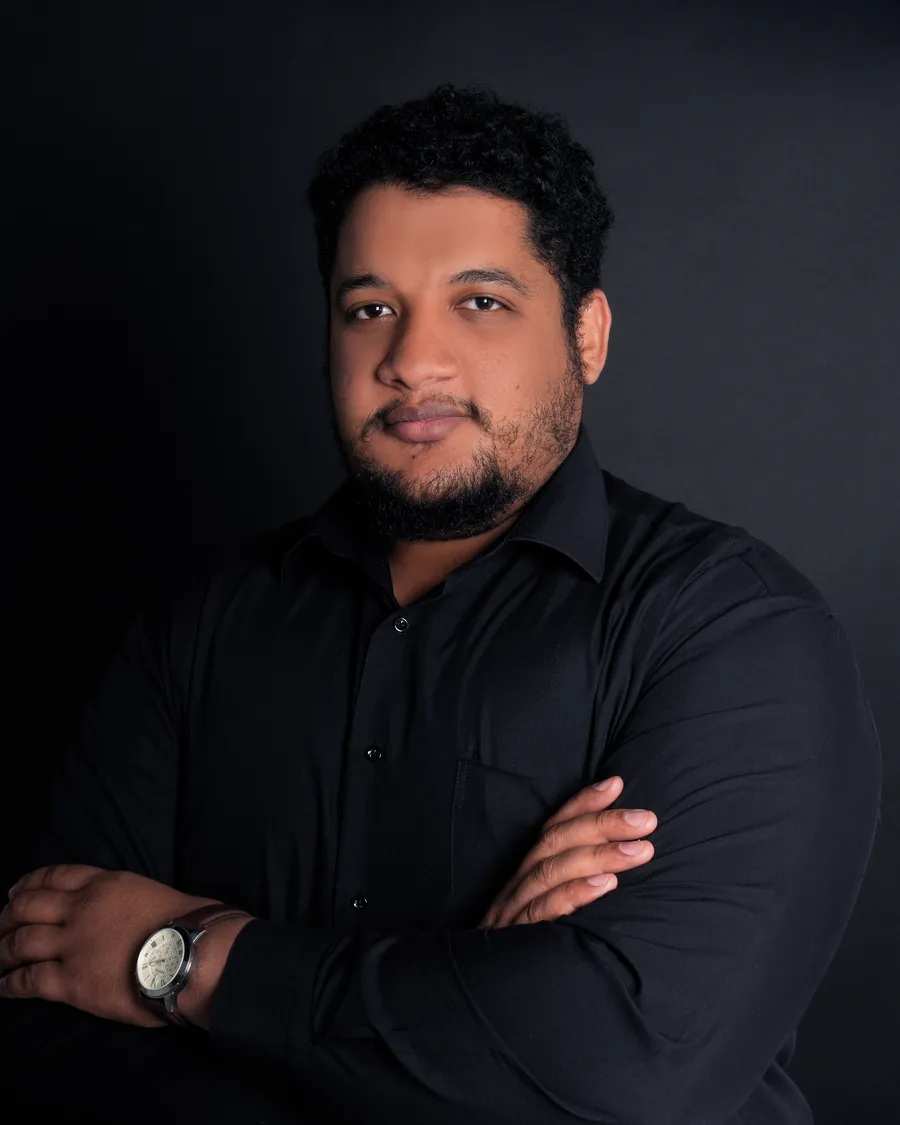
I'm Mugieb. I'm a customer success manager and solution architect based in Dubai, with accounts across the Middle East, Africa and Europe. I look after enterprise accounts, design the solutions that go into them, and lead the teams that implement them.
Before any of that, I was an engineer.
The longer one
I trained in petroleum engineering, then spent my first working years in QHSE and project engineering in Khartoum. If you haven't worked in QHSE, the job is roughly this: find the conditions that lead to incidents before the incident happens, write the protocols that stop them, and when something does go wrong, investigate the root cause properly so it doesn't happen a second time.
That's a specific way of thinking. You stop looking at outcomes and start looking at the conditions that produce them.
I moved into customer-facing work in Dubai, first at Dubai Taxi Corporation, then at Apple, where I ran T2 technical support for enterprise clients and owned the escalation process. That's where I learned what a real support operation looks like at scale, and where I started rebuilding workflows rather than just working inside them.
Then Moove, a mobility fintech scaling across Africa and the UAE, where I built the customer success function from nothing. Then Aulysius, a monday.com Platinum Partner, running enterprise accounts. And now Meta Lean, where I'm a customer success manager and solution architect, and a monday.com Brand Ambassador alongside it.
Somewhere in the middle of that I also co-founded a real estate business, which taught me more about cash flow and customer expectations than any course has.
What being a solution architect actually means here
Most customer success people arrive after the contract is signed. I don't.
I get involved before the sale closes, to make sure what the client is about to buy will actually fit how they work and what they're trying to achieve. I sit with them, understand the process, and write the solution architecture around it. Then I build the implementation roadmap and lead the team that delivers it.
It's rarely one product. A client might need work management, a service desk, an AI layer connecting the two, and an integration into the ERP they already run. My job is to design that whole thing and then make sure it gets built the way it was designed.
The reason I care about this order of events is simple. Almost every adoption problem I've been asked to fix later was created earlier, by selling something that didn't fit.
How I work
I like finding the actual failure point rather than treating symptoms. If a customer isn't paying, I want to know whether they were ever shown how to get value from what they bought. If adoption is low, I want to know whether the configuration deserves to be resisted before I try to persuade anyone.
I'm comfortable with data. Python, R and SQL, plus data science and analytics certifications, which means when I say a number I've usually checked it myself.
And lately I've been building AI agents into the work. Around nine skills so far, doing the parts of the job that were eating hours without producing judgement.
Outside the work
I owe most of this to my father, Saifeldin Awad, who earned his doctorate in strategic planning at 62 and made it look like a reasonable thing to do. And to my mother, who made the whole thing possible in the first place.